


Table of Contents
- Why AI Product Reviews Are Everywhere Now
- 7 Signs of AI-Generated Reviews to Watch For
- Examples of AI-Written Product Reviews (and How to Spot Them)
- AI Review Detector Tools Worth Trying
- How to Verify Online Product Reviews Before You Buy
- Common Mistakes Shoppers Make When Reading Reviews
- What to Do When You Find AI Product Reviews
- Frequently Asked Questions
Last Updated: October 17, 2026
Why AI Product Reviews Are Everywhere Now
Learning how to identify AI generated product reviews starts with understanding why they exist. Writing a fake review used to take time. Now a seller can produce hundreds in an afternoon, then post them across storefronts and marketplaces before anyone notices.
That shift matters for shoppers hunting for unique, hand-picked items. At Eve's Curious Collection, we read a lot of product feedback, and the difference between a real customer and a scripted one is usually visible once you know what to look for.
The Federal Trade Commission's rule on fake reviews and testimonials now bans the sale and purchase of fake reviews, and it gives regulators real power to act. Enforcement helps, but it does not filter your screen for you. The judgment call stays with the buyer.
Below, we'll show you exactly how to spot the patterns, test the details, and check a review before it influences your cart.
7 Signs of AI-Generated Reviews to Watch For
AI-generated reviews are product feedback written by software rather than a real buyer, and they tend to share a handful of recognizable traits. The trick is reading a cluster of reviews together, not one at a time. A single odd review means little. Five that share the same rhythm mean plenty.
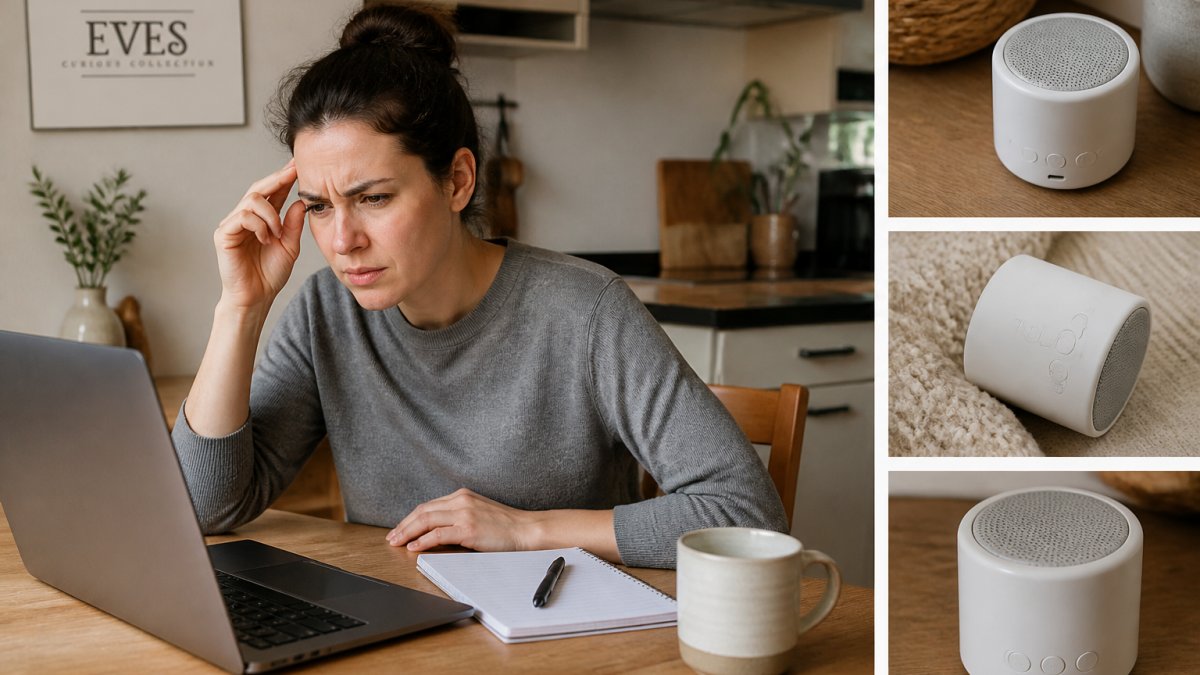
Watch for these seven signs of AI-generated reviews:
- Perfect grammar with zero personality. No typos, no slang, no sentence fragments.
- Praise without specifics. "Great quality and fast shipping" tells you nothing.
- Repeated sentence rhythm. Three or four reviews that all open the same way.
- Oddly formal phrasing. Words like "use" or "my experience with this product has been" in a casual store review.
- No product details. The review never names the color, size, or feature the buyer chose.
- Stacked timing. A burst of five-star reviews posted within hours of each other.
- Balanced-to-a-fault tone. Real buyers gush or complain. Bots split the difference.
Language That Sounds Like a Template
Template language is the clearest tell. AI models default to a smooth, even tone that no tired shopper actually writes in. A real review might say "loved the packaging, but the lid sticks." A generated one says "the product exceeded my expectations in every way."
Ask yourself one question: could this sentence describe any product on earth? If yes, it's probably filler.
Details That Don't Add Up
Details are where bots fall apart. Real buyers mention the thing they actually held, wore, or used. They name the shade, the weight, the fit, the sound. A generated review stays vague because the writer never saw the product.
Cross-check the review against the listing. If someone praises a feature the item doesn't have, that's a red flag you can act on.
Examples of AI-Written Product Reviews (and How to Spot Them)
Here are two examples of AI-written product reviews, side by side with what a real buyer might write.
Generated: "I recently purchased this item and I am extremely satisfied with my decision. The quality is excellent and it arrived quickly. I would highly recommend it to anyone looking for a reliable option."
Real: "Bought this for my sister's birthday and she texted me a photo of it on her shelf the same night. Smaller than I pictured, but that worked in its favor."
See the difference? The first could describe a lamp, a necklace, or a dog toy. The second could only describe one thing.
Try this test on any review you read: cover the product name and ask whether the text still makes sense for a different item. If it fits anything, treat it as generic at best.
AI Review Detector Tools Worth Trying
AI review detector tools can flag suspicious text, but none of them are perfect. Treat them as a first pass, not a verdict. Most work by scoring text for the statistical patterns that language models tend to produce.
A practical routine:
- Run the review through a detector and note the score, not just the label.
- Check the reviewer's history. One review ever, all five stars, is a pattern.
- Compare across sites. The same wording on two storefronts is a copy-paste job.
- Read the middle reviews. Three-star reviews are where real buyers vent specifics.
The Better Business Bureau's guidance on spotting fake online reviews recommends looking at reviewer profiles and posting patterns alongside the text itself. That combination catches more than any single tool.
How to Verify Online Product Reviews Before You Buy
Verifying online product reviews means checking three things: who wrote it, when they wrote it, and whether the details match the product. This is how to verify online product reviews without spending an hour per item.
| Check | What to Look For | Red Flag |
|---|---|---|
| Reviewer profile | History across categories | Account with one review only |
| Timing | Spread across weeks or months | Cluster within a few hours |
| Specifics | Names color, size, or feature | Generic praise only |
| Photos | Real, varied, slightly imperfect | Stock-style or missing |
| Tone | Opinionated, uneven | Smooth and neutral |
| Cross-site | Unique wording | Same text on other stores |
Run this checklist on any product where reviews are steering your decision. It takes two minutes and saves returns.
At Eve's Curious Collection, we lean on this same logic when we pick what goes on our shelves.
Common Mistakes Shoppers Make When Reading Reviews
The biggest mistake is trusting the star average. A product sitting at 4.8 stars can still be a dud if most of those ratings came from a burst of scripted posts.
Other common slips:
- Reading only the top reviews. They're the most gamed.
- Ignoring review dates. Old praise may not reflect the current product.
- Skipping the one-star reviews. They're often the most detailed and honest.
- Assuming photos prove authenticity. Images get scraped and reused too.
- Treating a detector score as final. Tools flag patterns, not intent.
What to Do When You Find AI Product Reviews
When you spot a fake, report it and move on. Most marketplaces and retailers have a "report review" link right on the review itself. Reporting helps the next shopper, and it puts pressure on sellers who rely on scripts.
Then adjust your buying decision. If a product's reviews are mostly noise, look for one with a smaller but more credible trail. A shop that shows fewer reviews with real detail is often the safer bet.
You can browse our latest finds and judge the products on their merits, not on a wall of template praise.
Frequently Asked Questions
How can you tell if a product review was written by AI?
Look for vague praise that could apply to almost anything, like 'great quality and fast shipping.' AI-written reviews often repeat the product name awkwardly, use perfect grammar with no personal voice, and skip specific details like sizing, scent, or how long the item lasted. Real reviews tend to include small complaints, comparisons to past purchases, or references to a specific use case. If several reviews share the same sentence structure or vocabulary, that's another red flag worth investigating before you buy.
Can AI review detector tools reliably identify AI-written reviews?
No detector is perfect. Tools like GPTZero, Originality.ai, and Copyleaks flag patterns common in machine-generated text, but they can produce false positives on reviews written by non-native speakers or people using heavy grammar assistance. Treat detector results as one signal, not a verdict. Run the review through two tools, then cross-check against the reviewer's history and whether the review includes verifiable details. A detector flag combined with generic language and a brand-new account is much stronger evidence than any single score.
What should you check in a product review before buying?
Check whether the reviewer mentions a specific use case, a timeline ('used it for three months'), or a drawback. Look at the reviewer's profile: how many reviews they've posted, whether they review unrelated categories, and whether their photos look original. Sort reviews by 'most recent' and 'lowest rating' to bypass the polished top reviews. Also confirm the review platform shows verified purchase badges. If a product has dozens of five-star reviews with no photos and no negatives, that pattern alone is worth a second look.
Are overly detailed product reviews more likely to be AI-generated?
Sometimes, yes. AI can produce long, structured reviews that list features in a tidy order, but real enthusiastic shoppers also write detailed reviews. The difference is specificity. AI detail tends to restate the product description ('the 12-ounce capacity is perfect for morning coffee'), while human detail includes odd personal context ('I knocked it off the counter twice and it survived'). If a long review has no personal anecdotes, no photos, and mirrors the listing copy, treat it with suspicion.
Fake reviews make every purchase feel like a gamble, and that's a frustrating way to shop. Eve's Curious Collection takes the guesswork out by hand-picking every item, so you're judging real products instead of scripted praise. Browse our ever-changing inventory, enjoy fast shipping to your door, and discover something unexpected. [Shop Now]


