


Table of Contents
- How to Identify High Quality Clothing Brands: Start with Fiber Content
- How to Check Fabric Quality Before You Buy
- Evaluate Garment Construction and Stitching
- How to Choose Good Quality Clothes Online
- Clothing Construction Quality Checklist
- How to Identify Quality Clothes Online Through Brand Transparency
- Assess Quality Relative to Price and Cost Per Wear
- Fit, Silhouette, and Construction Details Matter
- Frequently Asked Questions
Last Updated: October 15, 2026
How to Identify High Quality Clothing Brands: Start with Fiber Content
The quality of your clothes begins with what they're made from. Fiber content determines how a garment will feel, last, and perform over time. When you learn to identify high quality clothing, you're really learning to read labels, understand materials, and spot construction details that separate well-made pieces from fast fashion.
At Eve's Curious Collection, we curate unique items with quality in mind. We know that understanding fabric and construction helps you make smarter purchases, whether you're shopping for everyday wear or statement pieces like our F1 Racing Jacket.

Natural Fibers vs. Synthetic Fibers
Natural fibers like cotton, wool, and silk come from plants and animals. They breathe well, feel soft against skin, and age gracefully. Cotton is durable and washable. Wool regulates temperature and resists wrinkles. Silk drapes beautifully but requires careful care.
Synthetic fibers include polyester, nylon, and acrylic. They're often cheaper and easier to care for, but they can pill, trap heat, and wear out faster.
The blend matters more than the label. A 60% cotton, 40% polyester blend can outperform 100% cotton if the construction is superior.
Reading the Fiber Label Accurately
Every garment sold in the United States has a fiber label by law. This label tells you exactly what the garment is made from, listed by percentage in descending order.
Look for these details:
- The fiber name (cotton, wool, silk, polyester, etc.)
- The percentage of each fiber
- The country of origin
- Care instructions
A label that reads "100% Cotton" is clear. A label that reads "55% Cotton, 45% Polyester" tells you it's a blend.
Pay attention to fiber quality too. "Pima cotton" and "Egyptian cotton" are superior to standard cotton. "Merino wool" is finer than regular wool. These details appear on the label and indicate higher quality.
How to Check Fabric Quality Before You Buy
Before you commit to a purchase, examine the fabric itself. This is where your hands become your best tool.
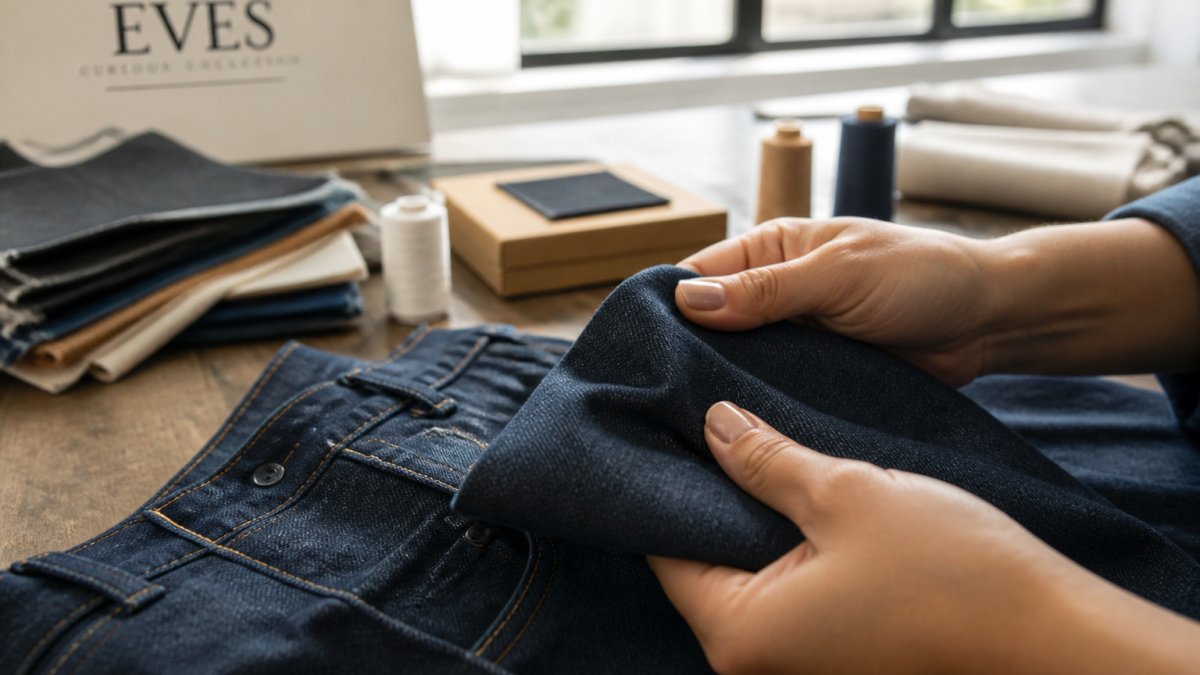
Fabric Weight and Density
Heavier fabric usually means better quality. Fabric weight is measured in grams per square meter (gsm) or ounces per square yard. A lightweight t-shirt might be 150 gsm. A quality t-shirt is often 180-200 gsm or higher.
Density refers to how tightly the fibers are woven together. Hold the fabric up to light. If you can see through it easily, the weave is loose.
Run your fingers across the fabric. Does it feel substantial or thin? Does it have a smooth finish or a rough texture? Quality fabrics feel intentional. They have character.
Hand Feel, Drape, and Elasticity
The hand feel is how fabric feels to your touch. Soft, smooth, and consistent hand feel indicates quality. Rough, scratchy, or uneven texture suggests lower quality.
Drape is how the fabric hangs on your body. High-quality fabrics drape smoothly and gracefully. Poor-quality fabrics bunch, wrinkle, or cling awkwardly.
Elasticity is the fabric's ability to stretch and return to its original shape. Grab a section of fabric and pull it gently. Does it snap back quickly? That's good elasticity. Does it stay stretched or recover slowly? That indicates lower quality or overuse.
Signs of Pilling, Shrinkage, and Colorfastness
Pilling happens when loose fibers ball up on the surface. It's a sign of poor fabric quality or low fiber strength. Check seams and high-friction areas (underarms, inner thighs) for pilling.
Shrinkage occurs when fabric loses size after washing. Check the care label for shrinkage warnings. Quality fabrics are pre-shrunk and have minimal shrinkage. If a label says "may shrink," that's a hint the fabric isn't fully processed.
Colorfastness is the fabric's ability to hold its color. Rub a damp white cloth on the fabric. If color transfers easily, the dye is weak.
Evaluate Garment Construction and Stitching
A beautifully made garment starts with quality stitching and seam construction. This is where you separate handmade craftsmanship from mass production.
Stitch Density and Seam Allowance
Stitch density is the number of stitches per inch. More stitches mean stronger seams. Count the stitches along a seam if you can. Quality garments have 8-10 stitches per inch or more.
Seam allowance is the fabric between the seam and the edge. Larger seam allowances (at least 0.5 inches) mean the garment can be repaired or altered. Tiny seam allowances indicate the garment isn't built to last.
Run your fingers along seams. Are they straight and even? Do they pull or pucker? Quality seams are smooth and consistent.
Finished Hems, Edges, and Hardware
Look at the hems. Are they straight and even? Do they use quality stitching? A poorly finished hem is one of the first things to fail.
Check the edges. Quality garments have finished edges that won't fray. Raw edges, if intentional, should be clean and even.
Examine hardware like buttons, zippers, and snaps. Quality buttons feel substantial and are sewn securely with multiple threads. Zippers should slide smoothly without catching. Snaps should click firmly. Cheap hardware fails quickly.
| Construction Element | What to Look For | What It Means |
|---|---|---|
| Stitching | 8-10+ stitches per inch, straight lines | Strong, durable seams |
| Seams | 0.5+ inch allowance, no puckering | Repairable and long-lasting |
| Hems | Straight, even, quality stitching | Won't unravel or fray |
| Buttons | Substantial feel, multiple threads | Won't fall off easily |
| Zippers | Smooth sliding, no catching | Won't jam or break |
| Edges | Finished, clean, no fraying | Professional quality |
How to Choose Good Quality Clothes Online
Shopping online makes it harder to feel fabric and inspect seams in person. But you can still identify high quality clothing if you know what to look for.
Pattern and Print Alignment
When fabric has a pattern or print, quality manufacturers align it carefully. Look at photos from multiple angles. Does the pattern line up at seams? Are prints centered on the front? Do patterns match where pieces are sewn together?
F1 Racing Jacket - Vintage Style Embroidered Outerwear →
Misaligned patterns indicate rushed production. Quality brands take time to cut and sew so patterns align perfectly.
Lining, Buttons, and Zippers
Check if the garment has lining. Quality jackets, dresses, and structured pieces have lining. Lining improves comfort and durability. Unlined garments are often lower quality or designed for specific purposes.
Examine buttons and zippers in photos. Can you see the quality? Are they substantial or flimsy? Quality brands show off their hardware because it's a selling point.
Look for reinforced areas. Quality garments reinforce stress points like buttonholes, pocket corners, and zipper attachment points. These reinforcements aren't always visible in photos, but quality brands mention them in descriptions.
Clothing Construction Quality Checklist
Use this checklist when evaluating any garment online or in stores:
- Fiber label is clear and complete
- Fibers are natural, premium, or intentional blends
- Fabric feels substantial and well-made
- Seams are straight with 8+ stitches per inch
- Seam allowances are at least 0.5 inches
- Hems are finished and even
- Buttons are sewn with multiple threads
- Zippers slide smoothly
- Pattern or print is aligned at seams
- Edges are finished, not raw
- Hardware is substantial and functional
- Lining is present (for appropriate garments)
- No visible pilling, loose threads, or defects
- Care instructions are clear and reasonable
How to Identify Quality Clothes Online Through Brand Transparency
Brand transparency tells you how committed a company is to quality. Transparent brands share their sourcing, production methods, and quality standards.
Manufacturing Transparency and Supply Chain
Quality brands tell you where their clothes are made. They name factories or regions. They explain their production process. They're proud of their work.
Brands that hide their supply chain often have something to hide. Check the brand's website. Do they explain where fabrics come from? Do they describe production methods? Do they name their manufacturers?
Research the brand's reputation. Look for independent reviews, not just their marketing. Read customer feedback about durability and quality. Long-term customer reviews reveal whether clothes last.
Production Standards and Ethical Practices
Quality production requires standards. Look for brands that mention certifications like Fair Trade, GOTS (Global Organic Textile Standard), or similar. These certifications mean the brand meets specific quality and ethical requirements.
Ethical production often correlates with quality. Brands that treat workers fairly and invest in good working conditions tend to produce better garments. They have time and resources to focus on quality.
Check if the brand offers repair services or guarantees. This confidence in their own product is a sign of quality.
Assess Quality Relative to Price and Cost Per Wear
A $100 shirt that lasts five years is cheaper than a $20 shirt that falls apart after three washes.
Garment Lifespan and Repairability
Estimate how long a garment will last. A quality t-shirt lasts 50-100 washes. A quality pair of jeans lasts 100+ washes. Fast fashion often fails within 20-30 washes.
Check if the brand supports repairs. Some brands offer mending services or sell replacement parts like buttons or zippers.
Look for timeless designs. Trendy pieces go out of style quickly. Classic designs stay relevant for years.
Calculate cost per wear. If you spend $80 on a jacket and wear it 100 times, that's $0.80 per wear.
Fit, Silhouette, and Construction Details Matter
Quality isn't just about materials and stitching.
A well-constructed garment has proper proportions. Seams sit where they should. Sleeves hang correctly.
When you try on clothes, notice how they feel. Quality garments move with your body.
Check the collar. Does it lay flat? Does it maintain its shape?
Look at shoulder seams.
Quality construction means a garment works for your body, not against it.
Learning to identify high quality clothing brands takes practice, but it saves money and frustration over time.
When you shop at Eve's Curious Collection, we've already done some of this work for you. Our hand-picked selection includes pieces like our Spider Denim Pants and Men's Hooded Zip-Up Baseball Jacket, each chosen for quality and uniqueness.


Frequently Asked Questions
What are the most important signs of a high-quality clothing brand?
The strongest indicators of high-quality clothing brands include consistent fiber content matching the label, visible stitching density with tight, even seams, finished hems and edges rather than raw cuts, and transparent information about manufacturing and materials. Brands that disclose their production standards and source materials openly tend to produce more durable garments. Check the care label for detailed washing instructions, which signals the brand understands garment durability and wants customers to maintain their pieces properly.
How can you tell if clothing is well made when shopping online?
When shopping online, examine product photos closely for stitch quality, seam alignment, and finished edges. Read the fiber content label carefully and verify the percentage of natural versus synthetic fibers. Look for detailed product descriptions that mention weight, lining, and hardware quality. Check customer reviews for mentions of durability, shrinkage, and how the garment holds up after washing. Brands offering size charts and fit guidance typically invest more in quality control. Eve's Curious Collection's curated selection includes pieces like the Spider Denim Pants, which feature durable denim construction with visible quality details such as multiple pockets and reinforced straps.
Are natural fabrics always better quality than synthetic ones?
Not necessarily. Natural fibers like cotton, wool, and silk offer breathability and comfort, but quality depends on fiber grade, weave density, and how they're processed. High-quality synthetic fibers or blends can provide superior stretch recovery, colorfastness, and durability. The key is matching the fiber type to its intended use: merino wool excels for temperature regulation, polyester blends work well for athletic wear, and pure cotton suits everyday basics. Always check the fiber content percentage on the label rather than assuming natural automatically means better.
What should you check on a clothing label before buying?
Before purchasing, verify the fiber content percentage (listed in order of dominance), country of origin, care instructions, and any manufacturer information. Look for specific fiber names rather than vague terms like 'blended fabric.' Check for a garment size chart that includes measurements, not just S-M-L sizing. The F1 Racing Jacket from Eve's Curious Collection, for example, lists specific details like weight and available sizes, helping you assess fit and durability before ordering. Detailed labels indicate a brand that prioritizes transparency and expects customers to care for their pieces correctly.


