


Table of Contents
- Curated Shopping vs Amazon: The Core Differences
- Amazon vs Independent Retailers: Price, Shipping, and Returns
- The Real Benefits of Curated Online Stores
- How to Find Unique Products Online Without Wasting Hours
- Data, Privacy, and the Environmental Impact of Logistics
- What Curated Shopping Looks Like in Practice
- Conclusion
- Frequently Asked Questions
Last Updated: September 17, 2026
Curated Shopping vs Amazon: The Core Differences
The question of whether curated shopping is better than Amazon comes down to what you value most: speed and price, or discovery and quality control. At Eve's Curious Collection, we see this trade-off play out every day. Curated shopping is a retail model where a human team selects a limited inventory of products, often from small-batch production runs, rather than listing millions of items from thousands of sellers. Amazon's model optimizes for breadth and logistics efficiency; a curated store optimizes for product discovery and brand authenticity. The right answer depends on whether you want a search engine or an editor.
How Each Model Decides What You See
Amazon's product discovery runs on algorithmic curation. Its recommendation engine weighs your browsing history, purchase data, and thousands of behavioral signals to surface products. That system is powerful, but it optimizes for conversion, which means sponsored placements and high-volume sellers often win the top spots.
Curated stores flip that. A person, not an algorithm, decides what makes the shelf. That human filter is why niche markets and small-batch production get visibility they'd never earn in a mass marketplace. The trade-off: a curated inventory is smaller by design, so you won't find everything in one place.
What the Convenience Factor Actually Costs
The convenience factor of mass marketplaces is real, and it's not free. One-click ordering, same-day delivery, and effortless returns come bundled with platform fees, sponsored listings, and a supply chain built for volume. Many shoppers never see those costs directly, but they shape what gets recommended and what gets buried.
Curated platforms accept a slower, more deliberate model in exchange for supply chain transparency and quality assurance. You trade some speed for knowing who picked the item and why.
Amazon vs Independent Retailers: Price, Shipping, and Returns
Amazon usually wins on raw price and shipping speed; independent retailers win on product quality and authenticity. That's the honest summary. But the gap is narrower than it looks once you account for platform fees, membership costs, and return logistics, the total cost of ownership, not the sticker price.
Price Parity and Platform Fees
A low list price isn't the whole story. Sellers on large marketplaces pay referral and fulfillment fees, and those costs get baked into pricing or absorbed by cutting corners elsewhere. Price parity between a marketplace listing and a curated store often reflects different things: one competes on volume, the other on vetting.
At Eve's Curious Collection, pricing reflects the hand-picked nature of the catalog. A Portable Projector, for example, is $72.00, and a Portable Small Projector is $176.59. You're paying for a chosen item, not a race to the bottom.
The Hidden Costs Most Shoppers Miss
Sticker price is only one line in the total cost of ownership. A few costs that rarely appear in a side-by-side price comparison:
- Membership fees. A paid membership can unlock faster shipping and other perks, but the annual fee only pays off if you order often enough to offset it. For occasional shoppers, it is a sunk cost.
- Shipping minimums. Many independent and curated stores offer free shipping above a threshold. If your cart falls short, you either pay for shipping or add an item you didn't plan to buy, a cost either way.
- Return shipping. Marketplace returns are often free for the buyer, but third-party items can carry restocking fees or return-shipping charges. Smaller retailers may cover return shipping or may not, so it pays to check before you buy.
- Time. A cheaper item that takes three weeks to arrive, or that you have to return twice, is not actually cheaper.
A common pattern is that the marketplace wins on the first line of the receipt and the curated store wins on the last. If you order rarely and value the item, the curated store's total cost is often closer than the sticker price suggests. If you order constantly and need it tomorrow, the marketplace's scale is hard to beat.
Shipping Reliability and Return Logistics
Shipping reliability varies widely across third-party sellers on mass marketplaces. A single Amazon listing can ship from a dozen different warehouses with different handling standards. Order fulfillment in a curated store is usually simpler because the seller controls the inventory and the packing.
Return logistics follow the same pattern. Big marketplaces make returns easy but can be slow to process refunds on third-party items. Smaller retailers often handle returns personally, which means fewer hoops but less automation.
| Factor | Amazon Model | Curated Shopping Model |
|---|---|---|
| Product discovery | Algorithmic curation | Human curation |
| Inventory size | Millions of listings | Limited, hand-picked |
| Price focus | Volume and speed | Vetting and quality |
| Shipping source | Multiple third-party warehouses | Seller-controlled |
| Returns | Automated, variable speed | Personal, fewer steps |
| Hidden costs | Membership fees, third-party return charges | Shipping minimums, possible return shipping |
| Best for | Everyday staples, speed | Unique finds, gifts |
The Real Benefits of Curated Online Stores
The benefits of curated online stores come down to three things: less decision fatigue, better quality control, and products you wouldn't have found on your own. When a real person narrows thousands of options to a few dozen, you spend less time filtering junk and more time actually choosing.
That matters most for gifts and novelty items, where the goal isn't the cheapest version of a known product but something unexpected. Curated stores also tend to build customer loyalty because the experience feels personal rather than transactional.
How to Find Unique Products Online Without Wasting Hours
Finding unique products online is mostly a filtering problem. Mass marketplaces bury distinctive items under sponsored results, so the trick is to search where the inventory is already narrow.
A simple approach that works:
- Start with a specific use case, not a keyword. "Gift for a movie-loving friend" beats "gift."
- Browse curated stores first, then use marketplaces only for price checks on items you've already found.
- Read user-generated reviews on the retailer's own site, not just the marketplace listing.
- Check whether the store names its sourcing or vetting process.
- Set a time limit. If you're still scrolling after 20 minutes, the store isn't curated enough.
That last point matters. A genuinely curated store should shorten your search, not extend it.
Data, Privacy, and the Environmental Impact of Logistics
Privacy and data tracking differ sharply between the two models. Large marketplaces build detailed behavioral profiles to power algorithmic curation, and that data drives advertising across the wider retail ecosystem. Curated stores typically collect far less because they don't need a recommendation engine to decide what to show you.
The environmental impact of logistics cuts the other way in some cases. Mass marketplaces achieve logistics efficiency at scale, which can mean fuller trucks and shorter routes per package. But the convenience factor encourages more individual orders, more packaging, and more return logistics. Curated stores ship less often and in smaller volumes, though without the same consolidation.
There's no clean winner here. The honest take is that both models carry a footprint, and the biggest variable is how often you order, not where.
What Curated Shopping Looks Like in Practice
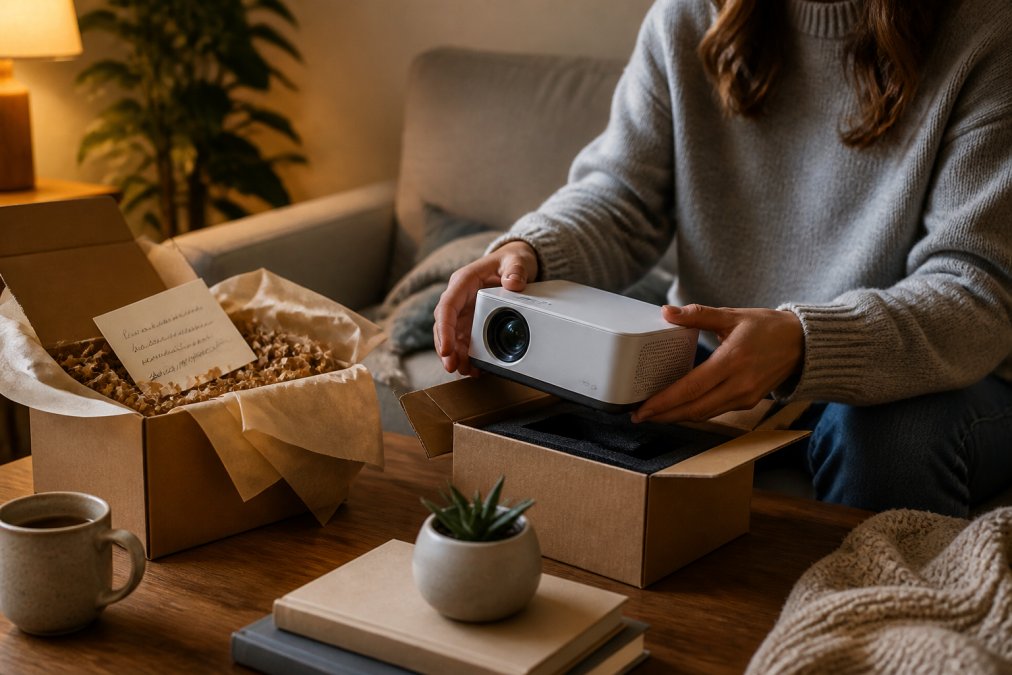
In practice, curated shopping feels less like searching and more like browsing a shelf someone built for you. You open a store, see a small set of items chosen with a point of view, and either something clicks or it doesn't. No infinite scroll. No 40 pages of near-identical listings.
Conclusion
The real challenge isn't picking a side. It's matching the model to the moment. Amazon wins when you know exactly what you need and want it fast. Curated shopping wins when you want something you didn't know existed, chosen by a person rather than a ranking algorithm.
Frequently Asked Questions
Is there a better place to shop than Amazon?
There is no single better store, but there is often a better fit. Amazon wins on selection, price parity, and next-day shipping reliability. Curated shopping wins on product discovery, quality assurance, and the odds that a gift feels personal rather than generic. If you know exactly what you need, a mass marketplace is efficient. If you want something unexpected, a hand-picked catalog saves hours of scrolling.
What are the primary benefits of curated shopping over mass-market retailers?
The main benefits of curated online stores come down to filtering. A human buyer reviews items before they appear, so you skip the counterfeit listings and 40 near-identical options that clog mass marketplaces. You also get smaller inventories, which makes product discovery faster and brand authenticity easier to verify. The trade-off is fewer choices and prices that reflect the curation work behind them.
Is curated shopping more sustainable than shopping on Amazon?
Not automatically. Sustainability depends on order fulfillment, packaging, and how far an item travels. Ask where the item ships from before assuming curation equals lower environmental impact.
How do I know curated products are actually hand-picked and not just marked up?
Ask two questions: who selects the inventory, and what happens when a product fails. A real curation process has a named buyer, a stated evaluation standard, and a return policy that covers defects without argument. On a mass marketplace, the same item often appears under a dozen seller names at different prices, which is a sign nobody vetted it. Small-batch production and consistent photography are also good signals.
What should I look for when choosing between a curated store and a marketplace?
Check four things: shipping speed in plain terms, the return window and who pays return shipping, whether prices include fees or add them at checkout, and how the store handles customer support accessibility. Then match those to your reason for buying. A birthday gift with a deadline needs reliable shipping. A household restock needs price transparency and easy returns.


