


Table of Contents
- What You'll Need Before You Start Verifying Product Quality Online
- How to Check If a Website Is Legit Before You Buy
- How to Spot Fake Online Reviews Before They Mislead You
- How to Verify Brand Authenticity and Seller Credibility
- Analyzing Product Images and Descriptions to Verify Quality Online
- Post-Purchase Physical Inspection: What to Check When It Arrives
- Return Policies, Consumer Protection, and Secure Payment Gateways
- Common Mistakes to Avoid When Checking Product Quality Online
Last Updated: August 21, 2026
What You'll Need Before You Start Verifying Product Quality Online
Learning how to verify product quality online is essential in an era of counterfeit goods and misleading listings. At Eve's Curious Collection, we've built our entire sourcing process around quality vetting, so we know exactly what red flags look like from the inside.
Before you start, gather these tools:
- A web browser with access to WHOIS lookup tools
- A reverse image search tool (Google Images or TinEye)
- A barcode scanning app on your phone
- The product's UPC, EAN, or ISBN number if listed
- The seller's stated business address and customer support contact
Verify product quality in layers: website legitimacy first, then seller credibility, then the product itself, and finally what happens after it arrives. Counterfeit products and dishonest sellers survive because buyers treat verification as optional. It isn't.
How to Check If a Website Is Legit Before You Buy
Most shoppers glance at a website, decide it "looks professional," and proceed. Sophisticated counterfeit operations invest heavily in polished storefronts because it works.
Check the SSL Certificate and Padlock Icon
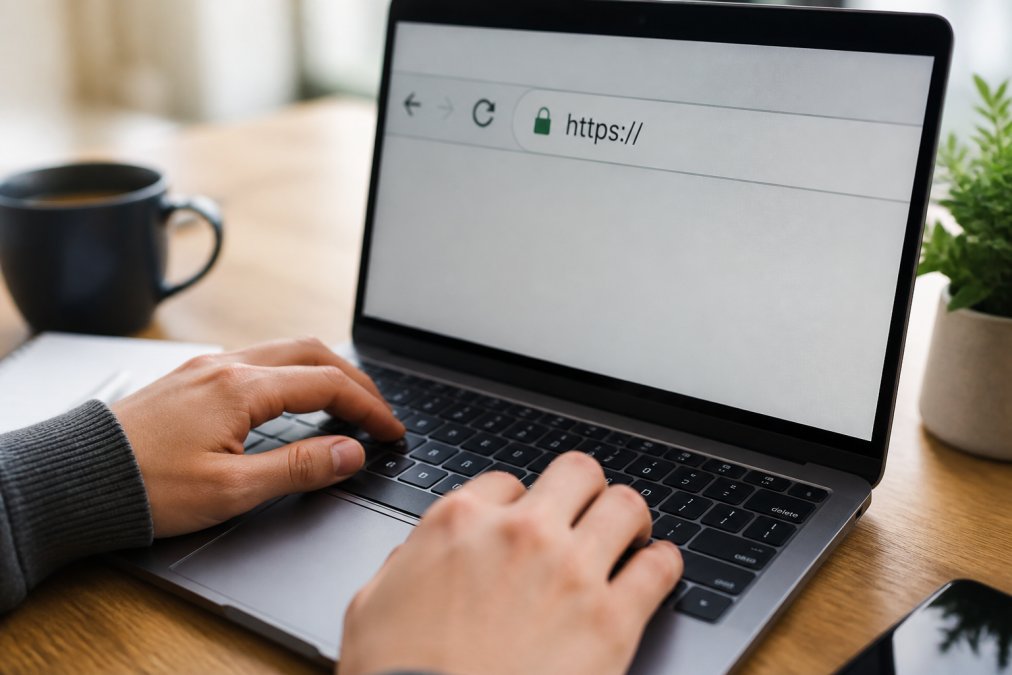
An SSL certificate encrypts data between your browser and a website. The padlock icon in your address bar signals encryption. Click it to confirm the certificate is valid and matches the domain you're visiting. A missing padlock or "Not Secure" warning is an immediate stop sign. However, SSL alone doesn't guarantee legitimacy; many scam sites now carry valid certificates.
Look Up Domain Age and Business Registration
Domain age is a reliable signal. Fraudulent sites frequently register new domains to avoid reputation damage. A domain registered within the past six months selling electronics or jewelry at steep discounts deserves scrutiny. Use a WHOIS lookup service to check registration date and owner details. According to ICANN's WHOIS lookup service, registration records often reveal mismatches between stated business locations and actual registrant data.
Confirm Legal Address and Customer Support Channels
A legitimate e-commerce business lists a verifiable legal address, working phone number, and direct customer support email. Paste the address into a map service to confirm it corresponds to an actual business location. If the only contact option is a web form with no response time commitment, treat that as a warning sign.
How to Spot Fake Online Reviews Before They Mislead You
Fake reviews distort consumer perception and make it hard to trust customer feedback. Knowing how to spot them is core to verifying product quality online.
Signs a Verified Purchase Badge Actually Means Something
A "verified purchase" label means the platform confirmed the reviewer bought the product there. It's meaningful but not foolproof. Sellers have arranged bulk purchases to generate verified reviews. Look for reviews with specific product details, use cases, or problems encountered. Generic praise repeated across dozens of reviews is a pattern, not social proof.
Red Flags in Customer Feedback Patterns
Look at the review timeline. A product that received 400 reviews in a single week, then went quiet, has almost certainly been the target of a review manipulation campaign. Legitimate products accumulate reviews gradually. Also check for reviewers with no profile history, multiple reviews using identical phrasing, reviews mentioning a different product name, or sudden spikes in 1-star reviews after exclusively 5-star ratings.
The FTC guidelines on endorsements and testimonials require that paid or incentivized reviews be disclosed. When they aren't, that's a regulatory violation and a signal about how that seller operates.
How to Verify Brand Authenticity and Seller Credibility
Seller credibility is separate from website legitimacy. A legitimate-looking website can still be an unauthorized reseller, gray-market operation, or counterfeit distributor.
Cross-Reference Manufacturer Databases and Authorized Retailer Lists
Most established brands publish a list of authorized retailers on their official website. If you're buying from a seller not on that list, you have no guarantee of authenticity or warranty coverage. Find the brand's official site, locate their "where to buy" or "authorized dealers" section, and confirm the seller appears there. If the brand has no such list, contact them directly through official customer support channels.
Use UPC, EAN, and ISBN Scanners for Product Lookup
Every legitimate manufactured product carries a UPC or EAN barcode registered to specific manufacturers and product variants. Scan or manually enter the barcode into a product database to verify it matches the described item. Mismatches indicate counterfeits. For books, the ISBN serves the same function. A barcode that returns no results or results for a completely different product is a serious red flag.
Analyzing Product Images and Descriptions to Verify Quality Online
Product images and descriptions are where counterfeit sellers frequently slip up. Authentic brands invest in consistent, high-quality photography and precise specifications. Counterfeit listings often recycle images, use inconsistent branding, or copy descriptions with minor alterations.
Look for spelling and grammar errors in technical specifications, vague or missing product dimensions and materials, descriptions that don't match images, blank batch numbers, or unverifiable certifications.
Run a Reverse Image Search to Trace Product Sourcing
Right-click any product image and run it through Google Images or a dedicated reverse image tool. If the same image appears across dozens of unrelated storefronts at wildly different prices, that product is almost certainly being drop-shipped from a low-cost manufacturer with no quality control. The image was lifted from a supplier catalog, not taken by the seller.
This technique also reveals original sourcing. If your search traces the image back to a manufacturer known for low-quality output, that tells you something the product listing never would. According to consumer guidance from the Consumer Product Safety Commission, counterfeit goods frequently fail basic safety standards that certified products must meet.
Post-Purchase Physical Inspection: What to Check When It Arrives
Verification doesn't end at checkout. Post-purchase physical inspection is your last line of defense.
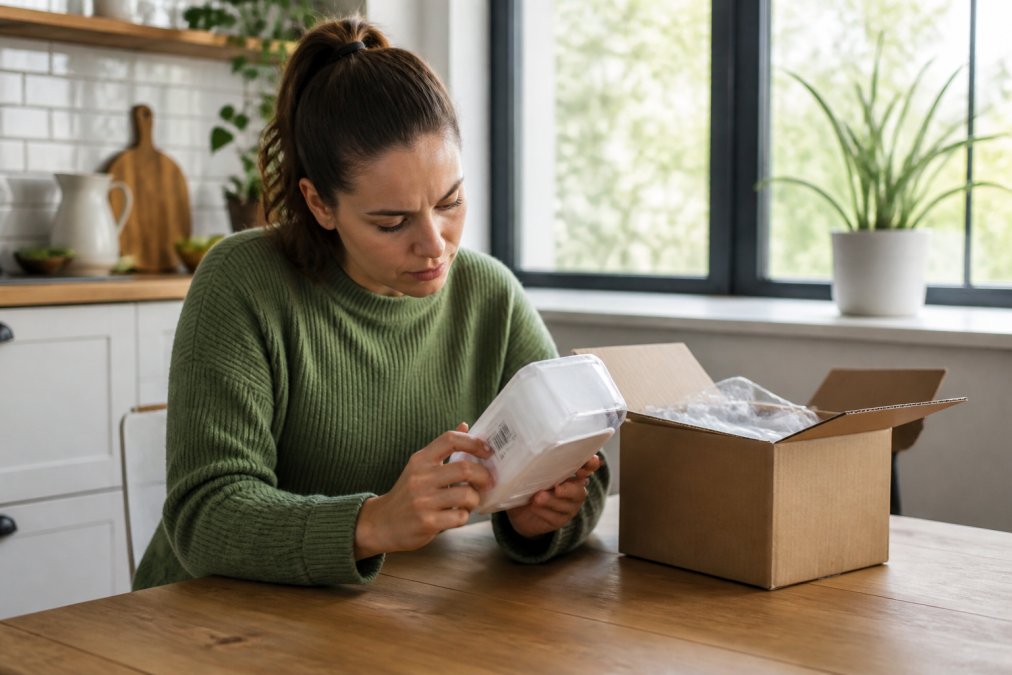
The moment your package arrives, before discarding packaging, run through this checklist:
- Check outer packaging for damage, resealing, or tampering signs
- Confirm batch or serial number on the product matches documentation
- Compare physical product against listed specifications (weight, dimensions, materials)
- Verify certification marks (UL, CE, FCC) are present and correctly formatted
- Inspect stitching, seams, or finish quality for inconsistencies
- Check that all included accessories match the stated contents list
- Smell the product if relevant; off-gassing or chemical odors indicate substandard materials
Document everything with photos before using the product. That documentation is essential for returns or disputes.
Return Policies, Consumer Protection, and Secure Payment Gateways
A seller's return policy tells you about their confidence in their product. Legitimate sellers with quality products offer clear, accessible return windows. Vague policies, restocking fees on defective items, or "all sales final" language are warning signs.
Pay with a credit card or payment method offering purchase protection. Credit card chargebacks under the Fair Credit Billing Act give you recourse if a product is materially different from its description. Debit cards, wire transfers, and cryptocurrency offer little consumer protection in disputes.
Check that the checkout page uses a secure payment gateway with recognizable processor branding and confirm the URL matches the domain you started on.
| Verification Step | What It Confirms | When to Do It |
|---|---|---|
| SSL certificate check | Encrypted connection | Before browsing |
| WHOIS domain lookup | Domain age and registrant | Before buying |
| Authorized retailer check | Brand authenticity | Before buying |
| Barcode/UPC scan | Product identity match | Before buying |
| Reverse image search | Source and pricing consistency | Before buying |
| Physical inspection checklist | Actual product quality | On arrival |
| Return policy review | Recourse if needed | Before and after buying |
Common Mistakes to Avoid When Checking Product Quality Online
The biggest mistake is treating any single check as definitive. A padlock icon doesn't mean the seller is honest. A high star rating doesn't mean the product is genuine. Verification works because checks compound. A fraudulent seller can fake one signal, but rarely all simultaneously.
Skipping the authorized retailer check. Many assume that if a product is listed on a major marketplace, it's been vetted. It hasn't. Counterfeit goods appear regularly on marketplace platforms.
Ignoring price anomalies. A product listed at a fraction of its typical price is not a deal, it's a signal. Counterfeit goods are frequently priced to undercut authorized retailers significantly.
Discarding packaging before inspecting. Batch numbers, country of origin, and certification marks are often printed on the outer box. Toss it immediately and you've lost primary documentation for disputes.
Assuming social media presence equals legitimacy. A seller's digital footprint is easy to manufacture. Look for genuine customer interaction and how long the account has been active.
What separates trustworthy online shopping from risky guessing is a systematic approach. Eve's Curious Collection applies that same systematic thinking to every product in our curated inventory, hand-picking items that meet quality standards before they reach our customers.
Online shopping carries real risk, but it doesn't have to be a gamble. The verification steps in this guide, from SSL checks and domain lookups to post-purchase physical inspection and barcode cross-referencing, give you a complete framework for protecting your purchases. Eve's Curious Collection takes that verification work seriously on your behalf: every product in our inventory is hand-picked with quality in mind, backed by fast shipping and a team that actually curates what we carry. Shop Now and discover what it feels like to buy with confidence.
Frequently Asked Questions
How can I tell if an online product is high quality before it arrives?
Start by checking the seller's credibility: look for SSL certificates, a verifiable legal address, and active customer support channels. Read reviews critically, filtering for verified purchase badges and detailed written feedback rather than generic five-star ratings. Scrutinize product descriptions for specific materials, dimensions, and batch numbers. Running a reverse image search on product photos can reveal whether the images are original or copied from other sources, which is a strong signal of authenticity.
What are the best ways to spot fake online reviews?
Look for patterns that feel unnatural: clusters of five-star reviews posted on the same day, reviewer profiles with no purchase history, and vague praise with no product specifics. Genuine customer feedback usually mentions real details like sizing, color accuracy, or packaging condition. Tools that analyze review authenticity can flag suspicious patterns. Cross-checking the same product across multiple platforms also helps, since counterfeit-heavy listings often have wildly inconsistent ratings depending on where they appear.
How do I verify if an online store is legitimate?
Check that the site uses HTTPS with a valid SSL certificate, visible as a padlock icon in your browser. Use a domain age lookup tool to see how long the site has been active, very new domains warrant extra caution. Search for a physical business address and verify it exists. Look for a transparent return policy, clear contact information, and a secure payment gateway. Authorized retailer status listed on a brand's official manufacturer website is one of the strongest trust signals available.
Can I use barcodes or product codes to verify authenticity?
Yes. UPC, EAN, and ISBN codes can be scanned or entered into product lookup databases to confirm that a listed item matches its real-world specifications. If a barcode returns no result, or if the result doesn't match the product description, that's a serious red flag for a counterfeit. Some manufacturers also provide batch number verification directly on their websites, letting you confirm that a specific unit was produced and distributed through legitimate channels.
This article was written using GrandRanker


