


Table of Contents
- What Fast Shipping Actually Means
- Expedited Shipping vs Standard Shipping: The Real Differences
- How Shipping Processing Time Works
- The Last-Mile Bottleneck: Why Fast Shipping Slows Down
- Delivery Estimate Accuracy: What You Should Actually Expect
- The Hidden Costs of Speed: What You're Really Paying For
- When Fast Shipping Actually Matters
- Sustainability Trade-offs of Priority Delivery
- Frequently Asked Questions
Last Updated: September 23, 2026
What Fast Shipping Actually Means
Fast shipping is not a single service, it's a range of delivery options that vary dramatically in speed, cost, and what happens behind the scenes. When you see "fast shipping" promised during checkout, you're looking at a spectrum that might mean anything from two-day delivery to same-day arrival, depending on the retailer, your location, and which service tier you select.
The confusion starts because the term itself is vague. One retailer's "fast shipping" might take five business days. Another's might arrive tomorrow. This guide breaks down what fast shipping actually means, how it differs from standard options, and what you should realistically expect when you pay for speed.
Understanding the mechanics behind fast shipping helps you make smarter choices about when it's worth the extra cost. Most people assume faster delivery is simply a matter of the carrier driving faster. The reality involves warehouse operations, processing delays, logistics networks, and something called the last-mile bottleneck that often becomes the real limiting factor.
Expedited Shipping vs Standard Shipping: The Real Differences
Expedited shipping is priority delivery that moves your order ahead of standard shipments through the fulfillment process and carrier network. Standard shipping processes orders in sequence and uses slower carrier routes that consolidate packages to reduce costs.
The gap between them is wider than most people realize. It's not just about speed, it's about the entire operational approach.
Speed Tiers Explained
Shipping tiers follow a clear hierarchy, though the names vary by carrier and retailer:
- Standard shipping: 5-10 business days. Orders are batched with others heading to similar zones. The carrier fills trucks as they accumulate shipments, which saves money but adds delay.
- Expedited/Priority shipping: 2-4 business days. Your package gets processed first and routed through faster carrier networks. Trucks may leave before they're completely full.
- Express shipping: 1-2 business days. Premium priority handling. Your package moves through dedicated sorting facilities and faster transportation routes.
- Next-day delivery: Arrives the following business day. Requires ordering before a specific cutoff time (usually 2 PM) and availability in the carrier's next-day zone.
- Same-day delivery: Arrives the same calendar day. Only available in major urban areas and for orders placed early in the morning. Involves local couriers rather than traditional shipping carriers.
Each tier costs progressively more because it requires different operational handling. A standard shipment might sit in a warehouse for two days waiting for a truck to fill. An expedited shipment triggers immediate processing and uses faster (more expensive) transportation.
Cost and Reliability Trade-offs
Paying for expedited shipping doesn't always guarantee reliability. In fact, faster services sometimes have lower reliability rates because they're more vulnerable to disruptions.
A standard shipment has built-in buffer time. If a truck is delayed, it doesn't matter much, the package wasn't promised in three days anyway. An expedited shipment has no slack. A single delay in the supply chain can mean a missed delivery window. This is why some retailers offer money-back guarantees on expedited shipping but not standard shipping.
The cost premium for expedited shipping can be significantly more than standard, depending on distance and package weight. For something ordered from Eve's Curious Collection or any retailer, that premium only makes sense if the delivery speed actually matters to you.
How Shipping Processing Time Works
Processing time is the hidden delay that nobody talks about. It's the gap between when you place an order and when the carrier actually picks it up from the warehouse.
Even with expedited shipping, your order doesn't move until it's been picked from inventory, packed into a box, labeled, and loaded onto a truck. For many retailers, this process takes 1-2 business days, even for expedited orders. Some retailers offer same-day processing on expedited orders, but it requires ordering before a cutoff time (usually morning) and paying a premium.
The Hidden Processing Delay
Standard processing typically takes 1-2 business days. Your order enters a queue with hundreds of others. Warehouse staff pick items, pack them, and stage them for pickup. The carrier arrives on a set schedule (often once per day) and collects all packages ready to ship.
Expedited processing can be faster, but not always by much. A retailer might promise "expedited processing" but still take 24 hours because they need that time to physically pick and pack your item. The speed gain comes from the carrier's handling, not the warehouse's.
Same-day processing is rare and expensive. It requires ordering early in the morning, paying a premium, and having the item in stock in the fulfillment center (not in a distant warehouse). Most curated retailers process orders during business hours, so an order placed at 3 PM won't start processing until the next morning anyway.
Warehouse Operations and Order Fulfillment
The warehouse is where most delays happen, even with expedited shipping. Here's why:
A fulfillment center might receive 10,000 orders per day. Staff need to physically locate each item, verify it's in stock, pick it from shelves, pack it, weigh it, print a label, and stage it for carrier pickup. This is labor-intensive work that can't be rushed without errors.
Expedited orders might skip some steps. Instead of going into a general queue, they go to a priority bin. But the underlying work is the same. A warehouse can only move so fast before mistakes increase and quality suffers.
Peak seasons (holidays, major sales events) slow everything down. An expedited order during peak season might take longer than a standard order during a slow week, because the warehouse is simply overwhelmed.
The Last-Mile Bottleneck: Why Fast Shipping Slows Down
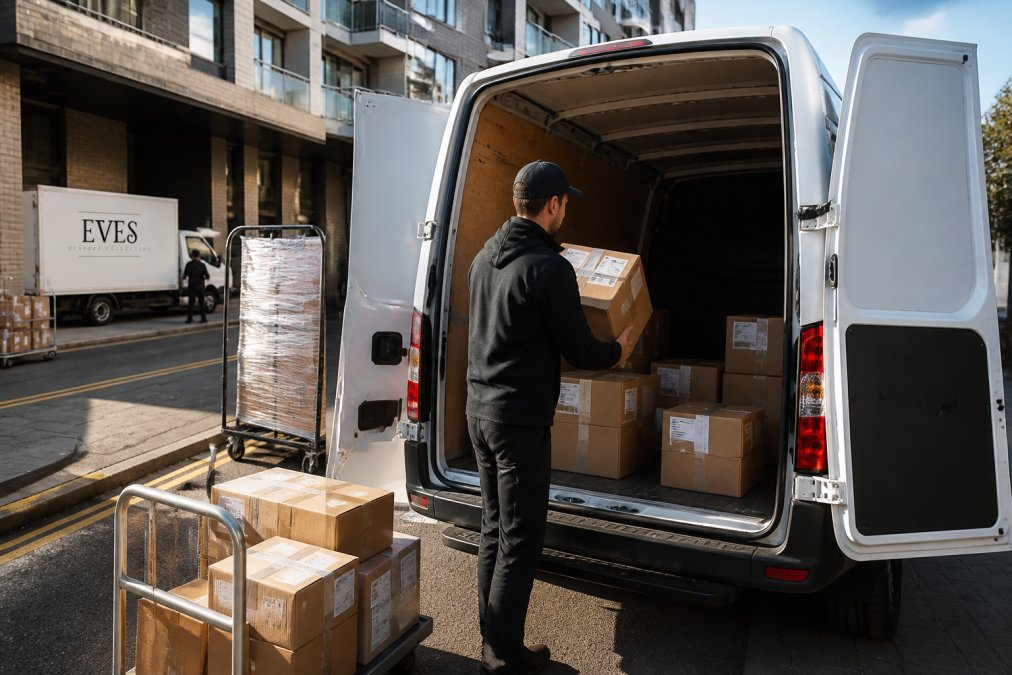
The last mile is the final leg of delivery, from the regional distribution center to your door. It's called the "last mile" because it's often the slowest part of the entire shipping process, even though it's the shortest distance.
A package might travel 1,500 miles in two days via truck and airplane. Then it sits in a local delivery facility for a day waiting to be loaded onto a delivery truck. Then the delivery driver takes three hours to deliver 200 packages across a 50-square-mile area. The last-mile logistics are the bottleneck.
This is why express shipping doesn't always feel that much faster. The package moved quickly through the long-distance network, but the final delivery still takes a full day because a driver can only make so many stops.
Urban areas have faster last-mile delivery because population density allows drivers to deliver more packages per hour. Rural areas have slower delivery because drivers travel longer distances between stops. A next-day delivery promise might apply only to zip codes within 50 miles of a major city.
Delivery Estimate Accuracy: What You Should Actually Expect
Delivery estimates are marketing projections, not guarantees. A "2-3 business day" estimate means the retailer expects delivery in that window under normal conditions. But normal conditions are rare.
Delivery estimates don't account for weekends or holidays.
Business Days vs Calendar Days
Business days exclude weekends and holidays. A "3 business day" estimate from a Friday order actually means 5 calendar days (Friday doesn't count, plus Saturday and Sunday don't count).
Shipping Zone and Transit Time Variables
Your location determines your shipping zone, which determines transit time. A package going to a nearby zip code might arrive in one day. The same package going to a remote area might take five days.
The Hidden Costs of Speed: What You're Really Paying For
Expedited shipping costs more because it requires different operational handling at every stage. When you pay for fast shipping, you're paying for:
- Priority warehouse processing and staff time
- Faster carrier routing and premium transportation services
- Expedited last-mile delivery in your area
- Reduced consolidation (trucks leave before they're full, which is inefficient)
- Risk assumption (the retailer guarantees delivery or refunds the shipping cost)
When Fast Shipping Actually Matters
Fast shipping isn't always worth the cost. It matters in specific situations where timing is critical.
Time-Sensitive Orders and Perishables
Fast shipping is essential for perishable items. Food, flowers, and certain personal care products deteriorate during transit. The longer they spend in the supply chain, the more likely they'll arrive damaged or expired. Expedited shipping reduces transit time and improves the chances that perishables arrive in good condition.
Meeting Customer Expectations
Retailers use fast shipping to manage customer expectations. When someone orders something, they want it quickly. Retailers that offer expedited shipping options appear more responsive, even if most customers choose standard shipping.
Sustainability Trade-offs of Priority Delivery
Fast shipping has environmental costs that most people don't consider when they select expedited options.
Frequently Asked Questions
Is 2-day shipping really 2 days, or does it include processing time?
Two-day shipping typically refers to transit time only, the days the package spends traveling after it leaves the warehouse. Order processing usually takes 1-3 business days before that clock starts. So a 2-day shipping order placed on Monday might not arrive until Thursday or Friday. Always check whether the carrier's estimate includes processing time or just transit time.
What's the difference between expedited shipping and standard shipping?
Expedited shipping prioritizes your order for faster fulfillment and uses quicker transit routes through the supply chain. Standard shipping processes orders in regular batches and uses slower, more economical routes. Expedited orders get priority handling at the warehouse, go through fewer distribution centers, and ship via faster carriers. The trade-off: expedited costs significantly more and may not always be necessary for non-urgent items.
Why does fast shipping sometimes take longer than the estimate says?
Delivery delays stem from several factors: shipping zone distance affecting transit time, carrier volume surges, weather disruptions, or incorrect delivery window estimates. The last-mile delivery, the final segment from a local distribution center to your door, often causes unexpected delays. Processing delays at the warehouse can also push back the start date. Tracking information helps clarify where the slowdown occurred.
Does overnight shipping actually guarantee next-day delivery?
Overnight shipping guarantees next-business-day delivery only if your order is placed before a specific cutoff time (usually early afternoon) and ships the same day. If you order late in the day, it may not process until the next business day, pushing delivery to day two. Weather, holidays, and shipping surcharges can also affect guarantees. Always verify the exact cutoff and service terms before ordering.


