


Table of Contents
- How Smart Thermostats Work vs Manual Control
- Smart Thermostat Energy Savings Percentage: What the Numbers Show
- Manual Thermostat vs Programmable Thermostat: Key Differences
- Upfront Cost vs Long-Term Value: ROI Calculation
- Smart Thermostat Features: Remote Access, Learning Algorithms, and Geofencing
- Best Smart Home Device Alternatives Without Subscription
- Installation, Compatibility, and Behavioral Savings Explained
- Conclusion: Is a Smart Thermostat Worth It?
- Frequently Asked Questions
Last Updated: September 28, 2026
How Smart Thermostats Work vs Manual Control
Smart thermostats learn your preferences and adjust automatically based on your schedule, location, and behavior patterns, while manual thermostats require you to physically adjust the temperature by hand.
Your HVAC system runs constantly, and how you control it directly impacts your utility bills. Manual thermostats demand constant attention, while smart thermostats automate the process, which is where smart thermostat energy savings become significant.
Manual thermostats have no memory, you set the temperature and it stays until you change it. Smart thermostats use learning algorithms and geofencing to anticipate your needs and trigger energy-efficient setpoints automatically when you leave.
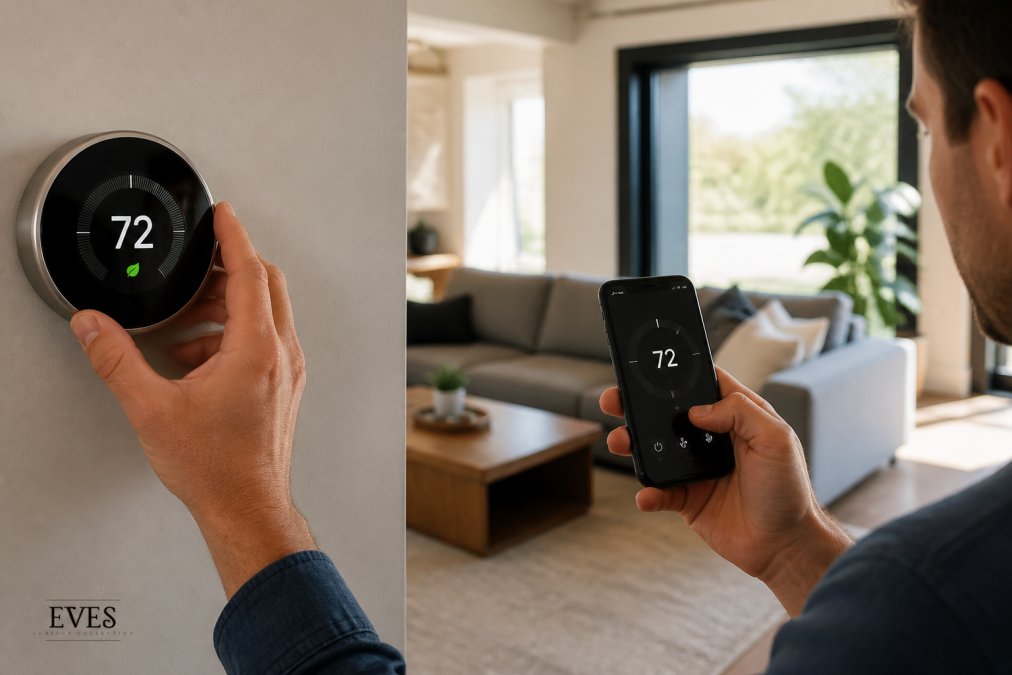
Smart Thermostat Energy Savings Percentage: What the Numbers Show
Energy savings claims around smart thermostats vary widely. Many manufacturers claim 10-15% annual savings, but that assumes you're currently wasting energy through manual inefficiency.
The actual savings depend on three factors: your current behavior, your HVAC system's efficiency, and how consistently you use the smart thermostat's features.
Behavioral savings come from automating adjustments most people miss, leaving home without lowering the temperature, sleeping without adjusting, or maintaining one comfort level 24/7. This typically saves 5-8% on heating and cooling costs for households that were previously wasteful with manual control.
Technological savings come from the thermostat's learning algorithm and sensors optimizing around ambient temperature and weather. This adds another 2-4% in savings for most users, depending on climate and HVAC maintenance.
Combined, realistic savings typically land in the 8-12% range annually. The key insight: the savings come primarily from your changed behavior, not from the thermostat being magically efficient. The device just makes the right behavior automatic.
Manual Thermostat vs Programmable Thermostat: Key Differences
A manual thermostat requires you to turn a dial or press buttons to set the temperature. It has no schedule, learning, or automation.
A programmable thermostat lets you set a schedule in advance to lower the temperature at night and when away, then raise it before you wake or return home. It follows that schedule automatically but doesn't learn or adapt.
A smart thermostat learns your patterns, adjusts based on weather forecasts, uses geofencing to detect when you're away, and provides detailed energy consumption data.
| Feature | Manual | Programmable | Smart |
|---|---|---|---|
| Requires manual adjustment | Yes | No | No |
| Learns your preferences | No | No | Yes |
| Geofencing capability | No | No | Yes |
| Remote access via app | No | No | Yes |
| Provides energy reports | No | No | Yes |
| Initial cost | $20-50 | $100-200 | $200-400 |
| Installation difficulty | Very easy | Easy | Moderate |
The trade-off is clear: manual thermostats cost less upfront but demand more attention. Programmable thermostats automate a fixed schedule but can't adapt to unexpected changes. Smart thermostats adapt automatically but require Wi-Fi connectivity and a compatible HVAC system.
Upfront Cost vs Long-Term Value: ROI Calculation
Most people calculate payback incorrectly by dividing upfront cost by annual savings, missing the real long-term value.
Let's work through an actual ROI scenario. Assume your annual heating and cooling costs are $1,200. A smart thermostat costs $300 and delivers 10% savings, or $120 per year. At face value, that's a 2.5-year payback period.
A smart thermostat typically lasts 10-15 years. Over that lifespan, $120 annual savings equals $1,200-$1,800 in total energy cost reduction, a 4-6x return on your initial $300 investment.
Many smart thermostats alert you when your HVAC system needs service, preventing expensive breakdowns and emergency repairs.
Manual thermostats have zero upfront and long-term value. Programmable thermostats cost $100-200 and generate modest savings if you use the schedule consistently. Smart thermostats cost more but deliver measurable ROI over their lifespan, especially if you frequently adjust temperatures inefficiently.
The real question: will you actually use the smart thermostat's features? If you set it and forget it, you'll see behavioral savings. For households committed to energy management, the ROI is strong. For set-it-and-forget-it users, payback takes longer.
Smart Thermostat Features: Remote Access, Learning Algorithms, and Geofencing
Smart thermostats typically include three core features: remote access via mobile app, learning algorithms that adapt to your schedule, and geofencing that detects when you leave home.
Remote access lets you adjust your temperature from anywhere. This solves a real problem: you leave home and remember you forgot to lower the temperature. With a smart thermostat, you adjust it from your phone, removing the friction of manual adjustment.
VersaHeat Portable Wall-Mounted Space →
Learning algorithms track your temperature adjustments and build a schedule that anticipates your needs. If you consistently raise the temperature to 72°F at 6 AM on weekdays, the thermostat learns that pattern and does it automatically. This is where the "smart" in smart thermostat matters, it adapts to your life rather than forcing you to adapt to its schedule.
Geofencing uses your smartphone's location to shift the thermostat to an energy-efficient setpoint when you leave and back to your comfort preference when you return, eliminating the most common source of wasted energy.
The catch: all three features require Wi-Fi connectivity and a compatible HVAC system. If your home has poor Wi-Fi coverage or an older HVAC unit, some of these features may not work as intended.
Best Smart Home Device Alternatives Without Subscription
Not every home needs a smart thermostat subscription, and not every smart home approach requires ongoing fees. If you want energy management without recurring costs, there are alternatives.
Programmable thermostats without smart features still deliver most of the energy savings at a fraction of the cost. A $150 programmable thermostat eliminates the need for manual adjustment and runs on a fixed schedule. You won't get geofencing or learning algorithms, but you will eliminate the biggest source of wasted energy: forgetting to adjust the temperature when you leave.
Smart thermostats with one-time purchase pricing exist but are rare.
Zone-based heating alternatives let you heat or cool only the rooms you're using. Instead of adjusting one central thermostat, you use dampers and smart vents to control airflow to specific zones. This approach works well for large homes with uneven occupancy but requires HVAC system modifications.
Portable space heaters and coolers offer localized temperature control without touching your central system. A product like the VersaHeat Portable Wall-Mounted Space Heater ($49.89) lets you heat just the room you're in, reducing the load on your HVAC system. This is especially useful for home offices, bedrooms, or seasonal temperature needs. You're not replacing your thermostat, you're supplementing it with targeted heating where you actually spend time.

For winter comfort without adjusting your thermostat, products like the 3-Level Safety Heated Blanket with Adjustable Temperature ($79.86) or the Heated Hoodie Blanket ($77.91) provide personal warmth while you lower your home's ambient temperature. This approach shifts the energy cost from your HVAC system to a smaller, more efficient device. You stay comfortable at 68°F instead of running your heating system to maintain 72°F, which translates to real energy savings without smart thermostat complexity.


The trade-off is clear: alternatives without smart features cost less upfront and have no subscription fees, but they require more manual management. A smart thermostat automates the process. A programmable thermostat requires you to set the schedule once. A space heater requires you to remember to use it.
Installation, Compatibility, and Behavioral Savings Explained
Smart thermostat installation looks simple until you hit the reality: HVAC system compatibility is the biggest barrier.
Most smart thermostats require a C-wire (common wire) connection to your HVAC system. This wire provides continuous power to the thermostat. If your home was built before the 1990s or has an older HVAC system, you may not have a C-wire. Some smart thermostats include adapters to work around this, but adapters add cost and complexity.
Installation itself typically takes 30-60 minutes if you're comfortable with basic electrical work. You turn off power at your breaker, disconnect the old thermostat, connect the new one, and restore power. The app setup takes another 15 minutes. Most people can do this themselves, though hiring an HVAC technician costs $100-200 if you want professional installation.
The harder part is understanding where your energy savings actually come from.
Conclusion: Is a Smart Thermostat Worth It?
A smart thermostat makes sense if you're currently wasting energy through manual inefficiency. If you leave your home without adjusting the temperature, maintain one comfort level 24/7, or frequently forget to optimize your heating and cooling, a smart thermostat delivers measurable ROI over its 10-15 year lifespan.
Frequently Asked Questions
Do smart thermostats actually save energy?
Smart thermostats can reduce heating and cooling costs by 10-23% annually, depending on your climate and usage patterns. They save energy through automated scheduling, learning your behavior, and adjusting temperatures when you're away. However, actual savings depend on how much you manually adjust a traditional thermostat. If you already maintain consistent temperatures, savings will be smaller. The learning algorithm adapts to your routine, reducing wasted heating and cooling.
What's the difference between smart thermostat energy savings percentage and what I'll actually save?
Smart thermostat energy savings percentage typically refers to the potential reduction in HVAC energy consumption. Real-world savings depend on several factors: your current manual adjustment habits, local climate, home insulation, and HVAC system efficiency. Behavioral savings (remembering to adjust temperature) often exceed technological savings. If you're diligent about manual adjustments, you may see 10-15% savings. If you rarely adjust your thermostat, you could see 20% or more.
How much can you save annually by switching to a smart thermostat?
Annual savings range from $50 to $300+ depending on your utility bills and climate. With average heating and cooling costs around $1,500-$2,000 per year, a 10-15% reduction equals $150-$300 in savings. Upfront costs ($100-$300) typically pay back within 1-2 years. Homes in extreme climates see faster ROI. Smart thermostats also extend HVAC system lifespan by reducing unnecessary cycling, adding hidden value beyond direct utility savings.
Can you just replace a thermostat with a smart thermostat?
Most smart thermostats install in 30 minutes if you have a C-wire (common wire) for power. However, compatibility varies by HVAC system. Older systems or heat pumps may require additional wiring or adapters. Check your current thermostat's wiring before purchasing. Some homes need professional installation ($100-$200), which affects upfront investment. Smart home integration also requires Wi-Fi connectivity and a compatible ecosystem, so ensure your home setup supports these requirements before upgrading.


